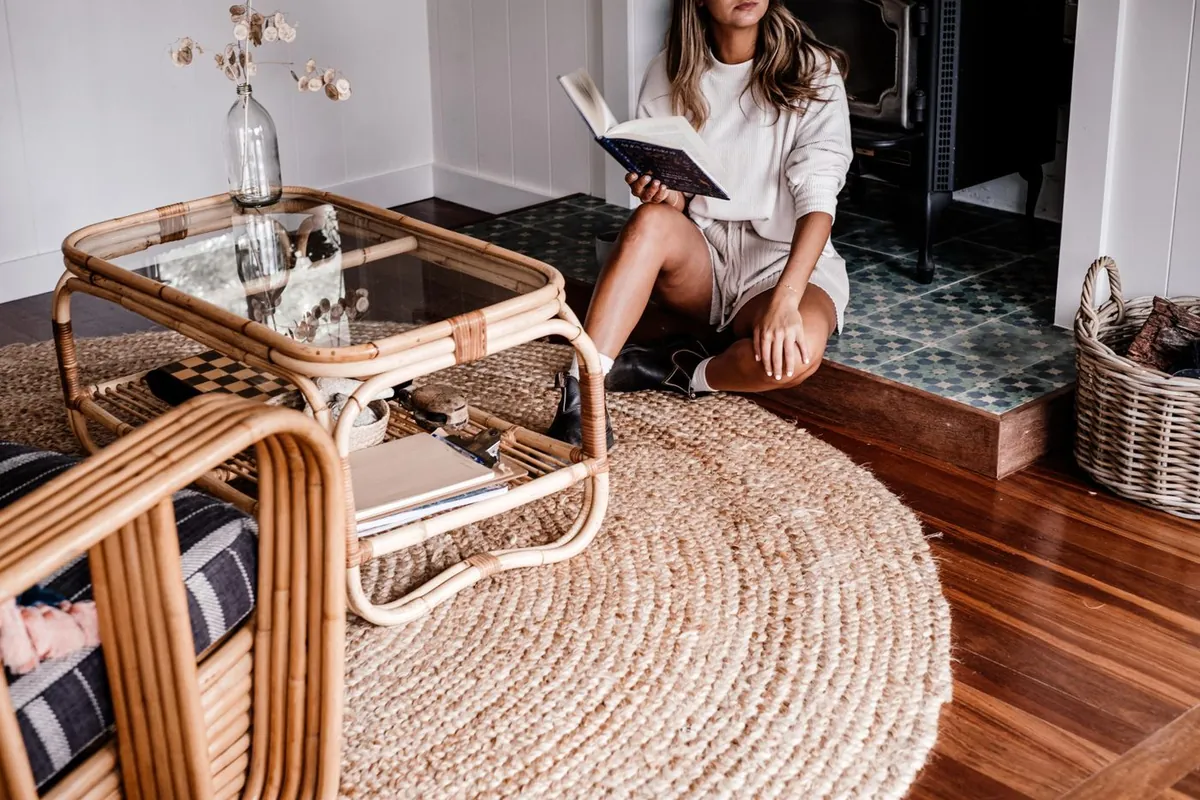
A living room can feel crowded even when it contains furniture you like. The difficulty may be a narrow route between chairs, a collection of objects with nowhere to land, or a lamp that is useful only to the person sitting nearest it. Before choosing new purchases, look at how the room works. A change in placement can sometimes solve a problem that another piece of furniture would only complicate.
Begin with the people who use the space and what they want to do there. Reading, watching television, talking, playing with a child and resting after work have different requirements. A room can support several activities without making every corner perform every task. The aim is a comfortable, usable arrangement, not a space that looks untouched or insists that ordinary possessions remain permanently out of sight.
Walk through the room as it is
Enter from each doorway and notice the route you naturally take. Does a table catch your shin? Do you step around a basket to reach the window? Is a chair placed where someone regularly passes behind it? These are useful observations because they identify the problem in physical terms. “The room feels wrong” becomes something more specific that you can test.
Keep important routes clear, especially for people using mobility aids or carrying things through the room. Do not move furniture in a way that blocks an exit, heater or required access. Measure before making a large change and ask for help with heavy items. A practical rearrangement should make daily movement easier, not create a new obstacle in a less obvious place.
Choose the main activity
Decide what the room needs to do most often. If conversation matters, consider whether people can sit comfortably without turning awkwardly toward one another. If television is central, think about glare and the view from different seats. If someone reads there every evening, give that activity a proper light and somewhere to put a book or drink.
You can still have secondary activities. A small reading chair may occupy a quiet corner, while a basket holds a few games near the sofa. The distinction helps you avoid arranging everything around a vague idea of completeness. A room that clearly supports the activities you enjoy can feel more comfortable than one filled with furniture because that is what living rooms are supposed to contain.
Move one thing before moving everything
Choose the item that causes the most inconvenience and test another position. Move a side table away from a doorway, turn a chair slightly or remove an unnecessary stool for a few days. Keep the change small enough that you can evaluate it. If the new position is worse, you have learned something without committing the whole afternoon to a major rearrangement.
Take a simple photograph before you begin if you want a record of the original layout. Avoid letting the photograph become the only measure of success. Sit in the room, use it in the evening and let other household members try it. A tidy-looking arrangement may still be awkward when someone wants to reach a lamp, stretch their legs or carry a tray.
Give everyday objects a landing place
Look at what accumulates: remote controls, mail, chargers, books or knitting. These objects are telling you where a useful storage spot is missing. A tray can hold a few small items, a drawer can collect cables and a basket can keep a current project together. Use storage that is easy to reach rather than something attractive but inconvenient to open.
Do not organize objects you no longer need simply to make them look orderly. Sort a small area and decide what belongs elsewhere, what should be recycled and what stays in the room. Keep the system simple enough that another person can understand it. If putting something away requires several steps or a hidden arrangement of smaller boxes, it may not happen very often.
Check the light after sunset
Daylight can hide an evening problem. Sit in the places you normally use and check whether a lamp shines into your eyes, leaves a book in shadow or creates glare on a screen. A different position or suitable bulb may help, but follow the fixture’s specifications. Do not exceed its permitted rating or improvise with damaged electrical equipment.
Keep cables out of walkways and avoid overloading outlets. If you need electrical changes, use a qualified professional. For simple arrangements, consider whether each frequently used seat has enough light for its purpose. A room does not need several decorative lamps to feel complete, but the light it has should be useful to the people who spend time there.
Let the surfaces show some room
A surface becomes easier to use when it has space available. Clear enough of a coffee table to put down a cup or open a game. Choose a few display objects that you enjoy instead of spreading every meaningful object across every shelf. You can rotate photographs or keepsakes without suggesting that the ones stored away matter less.
Leave cleaning access too. If every object must be moved before you can wipe a shelf, ordinary maintenance becomes a larger task. A little space between items makes dusting easier and allows their shapes to be seen. This is not an instruction to make your home minimal. It is a way to give familiar belongings enough space to be enjoyed without overwhelming the surfaces that hold them.
Use textiles to solve a real problem
A throw may be useful if someone gets cold while sitting. A washable cushion cover may suit a household with pets. A rug can be pleasant underfoot, but check that it is appropriate for the floor and does not introduce a slipping or tripping risk. Choose materials with care instructions you are willing and able to follow.
Try the textiles you already own before buying another set. A different placement may be enough to change how the room feels. Consider color in relation to the existing furniture rather than starting a separate scheme that requires replacing everything around it. Comfort and practicality are good reasons to make a change; matching a temporary trend does not have to be one.
Keep the room open to ordinary life
After a few days, ask what improved and what remained awkward. Perhaps the route is clearer but the side table is too far away. Perhaps a storage basket works for one person and is ignored by another. Adjust the arrangement without treating the first attempt as a final design. Rooms change as the household’s activities and needs change.
A calmer living room is not necessarily quieter in color or emptier in belongings. It is a room where the layout, light and storage make sense to the people using it. Start with a real inconvenience, test a small change and keep what helps. The most valuable improvement may be one you notice every evening rather than one that demands a new shopping list.