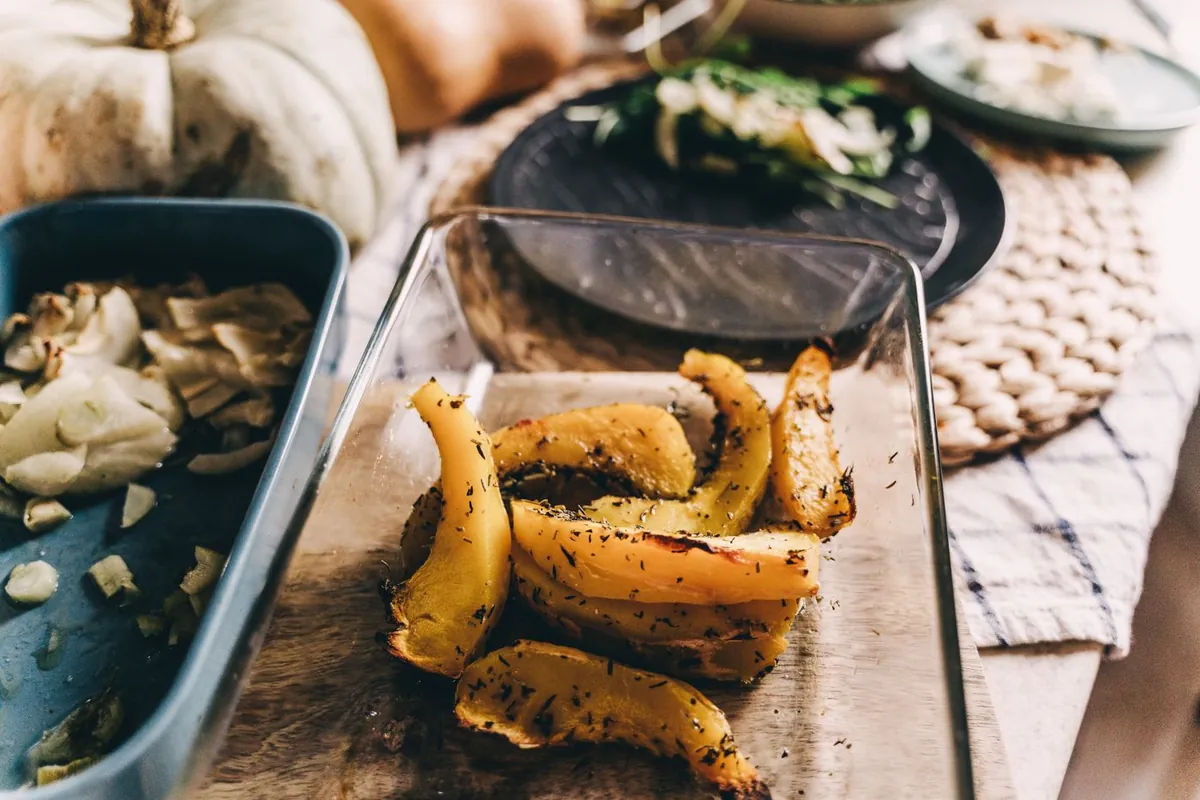
A good weekend lunch can be generous without taking over the day. Roasted vegetables and chickpeas are useful for that kind of meal: most of the cooking happens in the oven, the ingredients are easy to vary, and everyone can finish a bowl in the way they prefer. Add a simple lemon dressing, something fresh and a little bread or grain, and you have a lunch with enough detail to feel considered.
The method below is a flexible cooking guide, not a fixed promise about timing or a photographically tested recipe. Ovens, vegetables and baking trays differ. Use the suggested quantities as a starting point, check the food as it cooks and adjust the seasoning to your taste. Read labels for dietary needs and allergens, especially if you add a prepared sauce or serve the meal with toppings.
Put together a modest shopping list
For about four servings, begin with two cans of chickpeas, roughly fifteen ounces each; two medium carrots; one red onion; two bell peppers; and one zucchini. You will also need olive oil, a lemon, a small garlic clove, ground cumin or smoked paprika, salt and black pepper. Fresh parsley is useful but optional. A grain, bread or another accompaniment can make the meal more substantial.
These vegetables are examples, not a requirement to buy several things you will not use again. Substitute what you already have, while thinking about cooking time. Dense roots need longer than tender vegetables. If the vegetable drawer offers only carrots, onions and a little cabbage, you can build a meal around those rather than treating the missing items as a reason to abandon lunch.
Prepare the kitchen before the food
Set out the trays, a chopping board, a bowl for the dressing and a place for the finished food. Check that the oven racks leave room for heat to circulate. Heat the oven to about 400°F, or roughly 200°C, adjusting for your appliance’s instructions. If you use parchment, check its permitted temperature. A little preparation makes the later stages calmer without requiring a complicated timetable.
Wash hands and produce, then rinse and drain the chickpeas. Pat them dry with a clean towel if you want a firmer surface after roasting. Scrub or peel the carrots as appropriate. Remove the pepper cores and onion skin. Keep vegetable pieces reasonably consistent within each type so that you are not trying to rescue tiny pieces while much larger ones remain undercooked.
Give the vegetables enough room
Cut carrots into smaller pieces than zucchini because they generally need more time. Arrange the carrots and onion on one tray, lightly coat them with oil and add seasoning. Begin checking after about twenty minutes, then add the peppers and zucchini when appropriate. This staggered approach gives you more control than asking every ingredient to finish at exactly the same moment.
Space matters. A crowded tray holds moisture and can produce a softer result. If you have room, use two trays rather than piling everything into one deep layer. Turn or rearrange the food partway through cooking, using suitable oven protection. Watch for tenderness and the amount of browning you enjoy. The clock is a reminder to inspect, not a substitute for checking the vegetables.
Roast or warm the chickpeas separately
Toss the drained chickpeas with a small amount of oil and your chosen spice. Spread them on a separate tray and place them in the oven during the later part of the vegetables’ cooking time. Check and stir them as needed. They can be lightly toasted or simply warmed through; you do not have to turn them into hard, crunchy snacks for this lunch to work.
Keeping the chickpeas separate is helpful when cooking for different preferences. Someone may want fewer spices, a softer texture or a smaller portion. You can season part of the batch differently without changing the vegetables. It also allows you to remove one component when it is ready instead of leaving it in the oven while another part of the meal catches up.
Make a dressing that you can adjust
In a bowl, mix two tablespoons of lemon juice with about three tablespoons of olive oil. Add a small amount of finely grated garlic, black pepper and salt if suitable for your diet. Taste with a piece of cooked vegetable rather than drinking it from a spoon. Add water in small amounts if you want a lighter dressing, or more lemon if the meal needs brightness.
You can leave out the garlic, use another citrus or add chopped herbs. A yogurt-based sauce is another option if it fits your dietary needs. If you use tahini, remember that sesame is an allergen and check every guest’s requirements. Keep sauces separate until serving so each person can choose an amount and leftovers do not become wetter than intended.
Build bowls rather than identical plates
Place the vegetables and chickpeas in serving dishes. Offer the dressing, herbs and accompaniment at the table. You might serve a small portion of brown rice, warm bread or a green salad alongside. Use the ingredients you enjoy and portions appropriate to the people eating. There is no need to turn lunch into a demonstration of an ideal plate.
If you are feeding fewer people, roast a smaller quantity rather than making extras automatically. A meal is not better planned merely because it fills several containers. Think about when you will use remaining food and whether you have refrigerator space. If someone has a medical diet, let their established advice guide substitutions and portions rather than relying on the general suggestions here.
Handle leftovers promptly
USDA guidance says perishable leftovers should be refrigerated within two hours, or within one hour when temperatures are above 90°F. Use shallow containers and keep the refrigerator at 40°F or below. Do not leave a serving dish on the table all afternoon because the food contains no meat. Cooked food still needs sensible handling and an appropriate storage plan.
Label the containers with the date and use or freeze leftovers according to current food-safety guidance. For this meal, keep the dressing separate where practical. A later lunch might combine warmed vegetables with fresh greens, or place chickpeas beside a different accompaniment. Reheat safely and do not rely on smell alone to decide whether improperly stored food is acceptable.
Leave the rest of the weekend open
The point of this lunch is that you can cook something inviting without committing yourself to an elaborate menu. Clear the trays, keep a note of any changes you liked and let the meal be finished. Perhaps next time you will use cauliflower, choose a different spice or make less dressing. Those small observations are more useful than insisting the first version be perfect.
A flexible method can become part of your cooking repertoire because it welcomes what is available. It gives you enough structure to begin and enough freedom to adapt. Buy thoughtfully, give the vegetables room, keep the finishing touches simple and handle leftovers promptly. Then sit down while the food is ready and enjoy the part of the weekend you made time for.